

You finish cleaning the kitchen, look up, and see the problem immediately. The skylight still looks cloudy, and the morning sun exposes faint arcs where the paper towel dragged a wet film across the pane. In a coastal California home, that haze may be a mix of salt aerosol, pollen, roof dust, or mineral residue from sprinkler overspray. Reaching for a stronger spray usually makes the next decision worse.
A good skylight cleaning solution isn’t one universal recipe. The right choice depends on what the skylight is made of, what’s stuck to it, and how safely you can reach it. Glass, acrylic, polycarbonate, and coated panes respond differently to solvents, acids, abrasives, and even ordinary tap water. The safest cleaning plan often uses the mildest chemistry and the lowest-risk access method, rather than the strongest product in the cabinet.
Table of Contents
- Why Skylight Cleaning Solution Choices Matter More Than You Think
- How Purified Water Became the Backbone of Streak-Free Skylight Cleaning
- DIY Mixes vs Commercial Glass Cleaners for Skylights
- Matching the Cleaner to Your Skylight Material
- Choosing the Right Solution for the Stain You’re Fighting
- Why the Access Method Shapes the Best Cleaning Solution
- A Simple Skylight Cleaning Solution Decision Guide
Why Skylight Cleaning Solution Choices Matter More Than You Think
A skylight changes the cleaning conditions. Unlike a vertical kitchen window, it faces upward or sits on a slope, so dust, salt, pollen, and roof runoff can remain on the surface until moisture loosens them. Sunlight then warms the pane and speeds evaporation, leaving dissolved minerals and cleaner residue behind. That’s why a product that seems acceptable on an interior window can leave a noticeable film overhead.
The homeowner in the opening scene may assume the paper towel caused every streak. It may have contributed, especially if it pushed grit across the pane, but the water itself can be the bigger problem. If the final rinse contains dissolved minerals, evaporation leaves those minerals on the glass. Repeated deposits can bond to the surface and become harder to remove.
Practical rule: A skylight needs a cleaning plan, not simply a spray bottle.
Coastal California adds several complications. Ocean air can leave a salt film, the marine layer keeps surfaces damp before the day warms, and dry inland winds carry dust and pollen onto the roof. Sprinkler overspray can add hard-water deposits, particularly where irrigation reaches roof-mounted glass. Each soil responds to a different level of cleaning, and unnecessary chemistry can create a second problem.
The surface may be more delicate than it looks
Tempered glass is generally forgiving, but coated glass has an invisible functional layer that can be damaged by aggressive chemicals or abrasive scrubbing. Acrylic and polycarbonate domes can scratch and haze more easily than glass, so a gritty cloth or unsuitable solvent may cause permanent optical damage. Manufacturer guidance warns against abrasives, alkaline cleaners, solvents, metal blades, and unsuitable detergents for certain skylight materials, as detailed in the Architectural Specialties skylight maintenance manual, which tells owners not to use Windex or other household cleaners on its domes and prohibits acetone, gasoline, lacquer thinner, and kitchen scouring compounds.
The frame matters too. Cleaner can wick into silicone joints, gaskets, screens, and drainage channels. A solvent that removes a mark may weaken the surrounding seal or leave residue where you can’t rinse it completely.
Access changes the risk
Height is often the main hazard, not the stain. Federal rule 29 CFR 1910.28(b)(3)(i) requires that workers be protected from falling through any hole, including skylights, that is 4 feet or more above a lower level. It is an employer standard rather than a homeowner rule, but the classification is the point: to a safety regulator, a skylight is an opening a person can fall through, not a surface to stand on. The same manufacturer manual cited above says plainly: do not stand or crawl directly on skylights.
That is why purified-water systems and long-handled tools have become so useful. If a ground-level water-fed pole can loosen and rinse the soil, you may not need to step onto the roof at all.
How Purified Water Became the Backbone of Streak-Free Skylight Cleaning
Total dissolved solids, or TDS, is a practical way to think about rinse water. The reading represents dissolved material such as calcium, sodium, and other mineral salts. When water evaporates from a warm exterior pane, those solids stay behind as dots, rings, or a dull veil.
Deionized water has no dissolved minerals, while reverse-osmosis systems reduce mineral content before a final purification stage. Professional window cleaners often monitor the water with a TDS meter because the glass can look clean while the rinse water is already carrying enough residue to create spotting. Window cleaners working with purified water aim for roughly 0 to 10 parts per million of TDS, and prefer 0 to 5 ppm, according to Unger’s guide to pure-water cleaning mistakes. The glass industry’s own cleaning paper, NGA/IWCA Glass Technical Paper FB01-00, sets the outer limit at 20 ppm or less and states that tap water is not acceptable for the pure-water pole method.
What the reading means on cleaning day
If you’re washing an interior pane, tap water can work because you can wipe the surface dry. Exterior skylight glass is different. A water-fed pole relies on a rinse that can dry in place, so mineral content becomes part of the result.
| Water Source | Typical TDS (ppm) | Streak or Spot Risk | Best Use on Skylights |
|---|---|---|---|
| Purified or deionized water | Near 0 | Very low when the pane is properly rinsed | Exterior rinse and water-fed pole work |
| Low-mineral treated water | Below the practical spotting concern | Low, depending on soil and drying conditions | Exterior glass when tested with a TDS meter |
| Tap water | Varies by local supply | Higher on warm exterior glass | Interior glass, initial loosening, or situations where you’ll dry the pane |
| Hard water affected by irrigation | Varies and may carry concentrated salts | High for exterior rinsing | Avoid as the final rinse when spot-free drying matters |
For how a professional visit handles each skylight material, from glass to acrylic domes, see our skylight cleaning service guide. For the water-fed method itself, this explanation of purified-water window cleaning shows why a low-residue rinse is useful on exterior glass that is hard to reach.
Watch the purification system
A TDS meter gives you a direct check, but the equipment also provides clues. If a deionization resin cartridge changes color according to its manufacturer’s indicator, that color shift can signal that the resin is nearing exhaustion. Don’t rely on color alone if the meter shows rising TDS. Replace cartridges when the system’s instructions call for it or when the water no longer produces a clean, residue-free finish.
The useful lesson is simple: purified water removes the need to wipe mineral residue away after the rinse. It doesn’t dissolve every stain, but it gives the final stage a cleaner starting point.
DIY Mixes vs Commercial Glass Cleaners for Skylights
The most common DIY mistake is choosing a formula before identifying the surface. A mild soap mix may be suitable for ordinary glass, yet leave a film if you use too much. Vinegar may help with mineral film, but it isn’t automatically appropriate for every seal, coating, or plastic dome. Commercial glass cleaner has the same problem in reverse. A familiar label doesn’t guarantee compatibility with a skylight.
Four household formulas homeowners reach for
A few drops of dish soap in warm water can loosen fingerprints, pollen, and light organic grime. Use too much, though, and the surfactant film becomes difficult to rinse from an overhead pane. A clean, grit-free cloth or sponge matters as much as the soap because trapped particles can scratch glass and plastics.
A 50/50 white vinegar and water mix can soften some mineral deposits. It may be useful on compatible glass, but avoid allowing acidic solution to sit around silicone, gaskets, painted frames, or unknown coatings. Test a small area and rinse thoroughly.
A diluted isopropyl alcohol blend can help a greasy mark flash off faster. Alcohol isn’t a universal cleaner for acrylic or polycarbonate, and fast evaporation can leave you chasing overlapping edges on a warm pane. Use it sparingly and only after checking the manufacturer’s guidance.
Baking soda paste seems appealing for hard-water spots because it adds scrubbing power. That’s exactly the concern. Even a mild abrasive can create fine scratches or haze, especially on plastic and coated surfaces.
Commercial products still require label discipline
Ammonia-based sprays, including familiar products such as Windex, can cut ordinary grime on compatible glass. They’re a poor default for unknown acrylic, coated panes, or sensitive seals. Vinegar-based commercial cleaners reduce reliance on ammonia, but their acidity still doesn’t make them suitable for every material.
Professional glass-cleaning concentrates from brands such as Unger or Ettore may offer controlled dilution and lower residue when used as directed. The important variables are pH, surfactant load, fragrance additives, and material warnings, not the professional appearance of the bottle.
| Solution | Best At Removing | Risk to Skylight | Compatible Materials |
|---|---|---|---|
| Mild soap and warm water | Dust, pollen, light grime | Soap film if overused or poorly rinsed | Many standard glass surfaces, compatible plastics |
| Diluted vinegar solution | Some mineral film | Possible concern around seals, frames, and coatings | Manufacturer-approved glass surfaces |
| Diluted isopropyl alcohol | Small greasy marks and adhesive-like residue | Can be unsuitable for plastics or sensitive finishes | Approved glass surfaces after testing |
| Ammonia-based spray | General grime and fingerprints | May damage acrylic, coatings, or surrounding materials | Only where the manufacturer allows it |
| Professional concentrate | Controlled cleaning of routine glass soil | Wrong dilution or formula can still harm a surface | Materials listed by the product maker |
| Baking soda paste | Light scrubbing of stubborn residue | Abrasion and micro-scratching | Generally not a first choice for skylights |
For routine work, choose the mildest cleaner that removes the soil, then remove it completely with a purified rinse. A stronger formulation shouldn’t compensate for an unsafe access plan or a dirty applicator.
Matching the Cleaner to Your Skylight Material
Start with the material before you choose a stain treatment. If you can’t identify it, look for the manufacturer’s label, model information, installation paperwork, or cleaning bulletin. A clear appearance doesn’t tell you whether the pane is tempered glass, acrylic, polycarbonate, Low-E glass, or a specialty coated product.
Tempered glass is usually the most forgiving option. A neutral-pH glass cleaner, a properly diluted alcohol blend, or purified water can work when applied with a soft, grit-free microfiber tool. The main threat is often mechanical. Sand, roof grit, and dirty pads can create scratches even when the chemistry is mild.
Acrylic and polycarbonate need a softer approach
Acrylic and polycarbonate domes are lighter and more impact-resistant than glass, but their surfaces can scratch and haze readily. Use dilute soap and lukewarm water or a cleaner specifically approved for the plastic. Avoid ammonia, acetone, strong degreasers, abrasive powders, rough brushes, and metal blades unless the manufacturer explicitly permits a particular tool.
Don’t scrub a plastic dome to compensate for a weak rinse. First loosen the soil with water, then lift it away with a clean microfiber cloth. Replace the cloth when it picks up visible grit rather than dragging that grit over the rest of the pane.
Coatings and seals deserve equal attention
Low-E and self-cleaning coatings can change the cleaning rules. A coated pane may resist some organic soil, but alkaline degreasers, solvents, abrasive pads, and forceful scrubbing can damage the treatment. Use the product guidance for that exact skylight instead of assuming that a cleaner safe for bare glass is safe for coated glass.
The seal around the frame also needs protection. Solvent-heavy products can migrate into silicone or gasket joints, while excess liquid can collect in channels, screens, or motorized vent components. Apply solution to the tool rather than flooding the assembly.
| Cleaning Solution | Tempered Glass | Acrylic/Polycarbonate | Low-E or Coated Glass | Sealant Compatibility |
|---|---|---|---|---|
| Purified water | Generally suitable | Often suitable when used gently | Generally suitable when approved | Low chemical concern |
| Mild soap solution | Often suitable | Preferred starting point when approved | Usually safer than harsh chemistry, verify first | Rinse from joints |
| Diluted vinegar | May help on approved glass | Use only with explicit approval | Avoid unless the coating maker allows it | Keep off seals and frame joints |
| Isopropyl alcohol blend | May suit specific glass surfaces | Verify carefully before use | Verify carefully before use | Don’t allow pooling |
| Ammonia cleaner | Material-dependent | Avoid unless approved | Avoid unless approved | Keep away from gaskets |
| Abrasive paste or pad | Scratching risk | Avoid | Avoid | Can damage adjacent finishes |
Material check: If a label warns against acrylic, polycarbonate, or coated glass, treat that warning as relevant to the skylight unless its manufacturer says otherwise.
Choosing the Right Solution for the Stain You’re Fighting
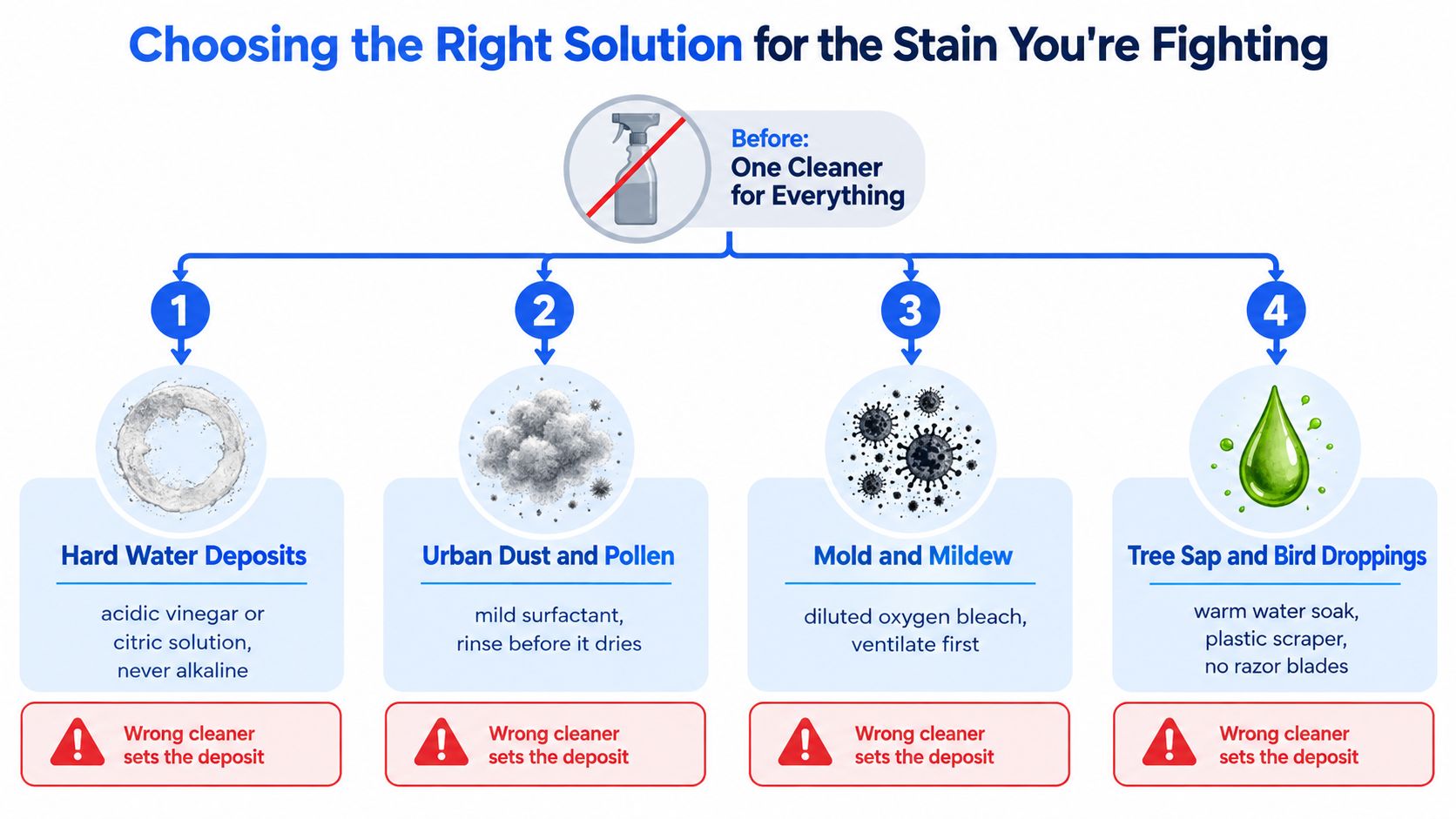
The stain tells you how much chemistry you need. A skylight covered in loose pollen doesn’t need the same treatment as glass marked by irrigation minerals, and an oxidation stain won’t respond to a routine spray. Start with the least aggressive method that matches the deposit.
Dust and pollen
Loose dust, pollen, and light coastal residue usually need water, gentle agitation, and a thorough rinse. A clean microfiber head can lift the film without adding surfactant. If the pane is dry and gritty, rinse first so the tool doesn’t grind particles into the surface.
Keep the solution mild and prevent it from drying before you rinse. Drying detergent can leave a visible edge, especially where the pane is warmed by direct sun.
Coastal salt film
Salt aerosol can form a thin haze along exposed glass and frames. A purified-water rinse is useful because it removes dissolved salt without replacing it with fresh mineral residue. On an exterior pane, rinse water above the 20 ppm TDS professional standard carries a real spotting risk, and local tap water runs far above it, as described in the hard-water spot removal guide for windows.
Work from the top down, rinse generously, and inspect from several angles. Salt film can look gone from one viewing position while remaining as a dull band when sunlight crosses the pane.
Sprinkler and irrigation deposits
Hard-water spots need a compatible mild acid to dissolve mineral material. Diluted white vinegar or a citric-acid-based professional spotter may help on approved glass, but first protect the frame and confirm that the pane and coating can tolerate the product. Don’t assume ammonia will remove a calcium deposit. It may clean the surrounding grime while leaving the mineral halo intact.
Oxidation and roof-runoff stains
Brown or rainbow discoloration from roof runoff can be more chemically complex than dust or salt. A plain glass spray usually won’t restore that type of mark. A compatible glass-restoration product and non-scratch pad may be necessary, but coated glass and plastic domes should be referred to a professional or manufacturer-approved process.
Decision point: Identify the stain first, then choose the chemistry. Don’t choose the chemistry and hope it identifies the stain for you.
Why the Access Method Shapes the Best Cleaning Solution
A homeowner may ask for the strongest skylight cleaning solution because the pane looks unreachable. That reverses the order of decisions. Access should determine the cleaning method first, because a mild product used safely from the ground is preferable to a stronger product applied while balancing on a roof.
A low-slope curb-mounted skylight may be reachable from an interior loft area. In that setting, a low-foaming, low-drip cleaner helps protect flooring, insulation, furnishings, and trim below. Use a soft applicator, keep the amount controlled, and avoid allowing liquid to enter vents, screens, motors, or frame channels.
A single-story pitched skylight may be reachable with an extension pole or water-fed pole from the ground. Purified water lets the operator loosen soil and rinse without carrying a bucket up a ladder. The water-fed pole system guide explains how the pole and brush work together to clean glass while keeping the operator at ground level.
Steep roofs call for a different decision
A steep second-story skylight is not an invitation to improvise. Skylight surfaces can fail under load, and a pane that looks solid from below may not be designed to support a person. Fall protection, suitable footwear, harness systems, scaffolding, and trained access procedures belong in the plan when ground-level tools can’t reach.
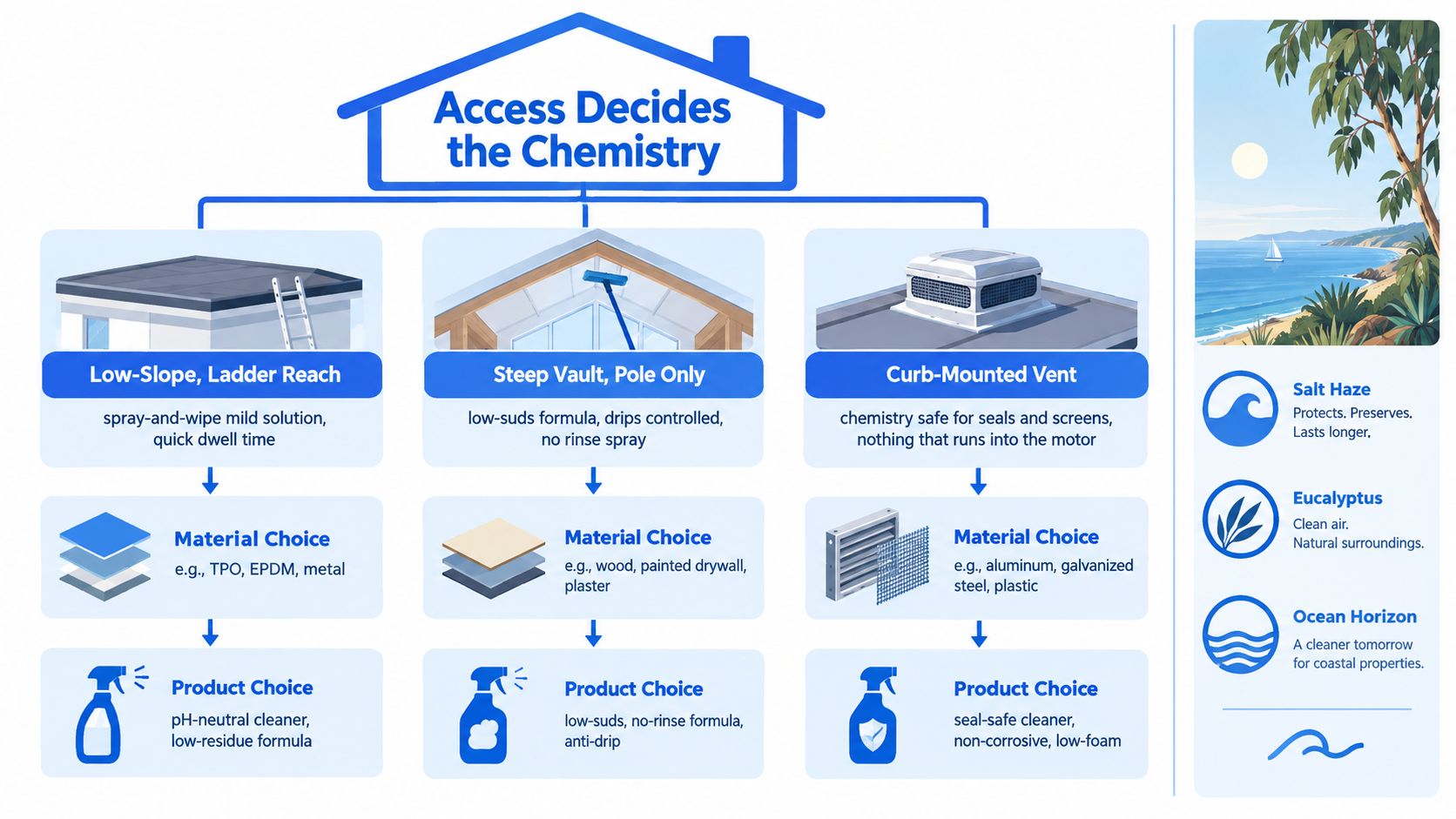
A pole changes more than reach. It reduces ladder repositioning, limits roof exposure, and supports a simpler rinse-based process. A traditional mop and squeegee can still make sense on a safely accessible, roof-walkable unit, but the worker must control runoff, protect the frame, and avoid dragging grit across the pane.
Match chemistry to the working position
The strongest solvent a homeowner should need is rarely the answer to a difficult skylight. If a stain requires aggressive chemistry, long dwell time, scraping, or heavy pressure, the job may need specialist restoration rather than a stronger consumer spray.
Use a mild solution for interior or close-range work, purified water for many ground-level exterior jobs, and manufacturer-approved chemistry for a specific deposit. The safest choice often keeps both the cleaner and the person away from unnecessary risk.
A Simple Skylight Cleaning Solution Decision Guide
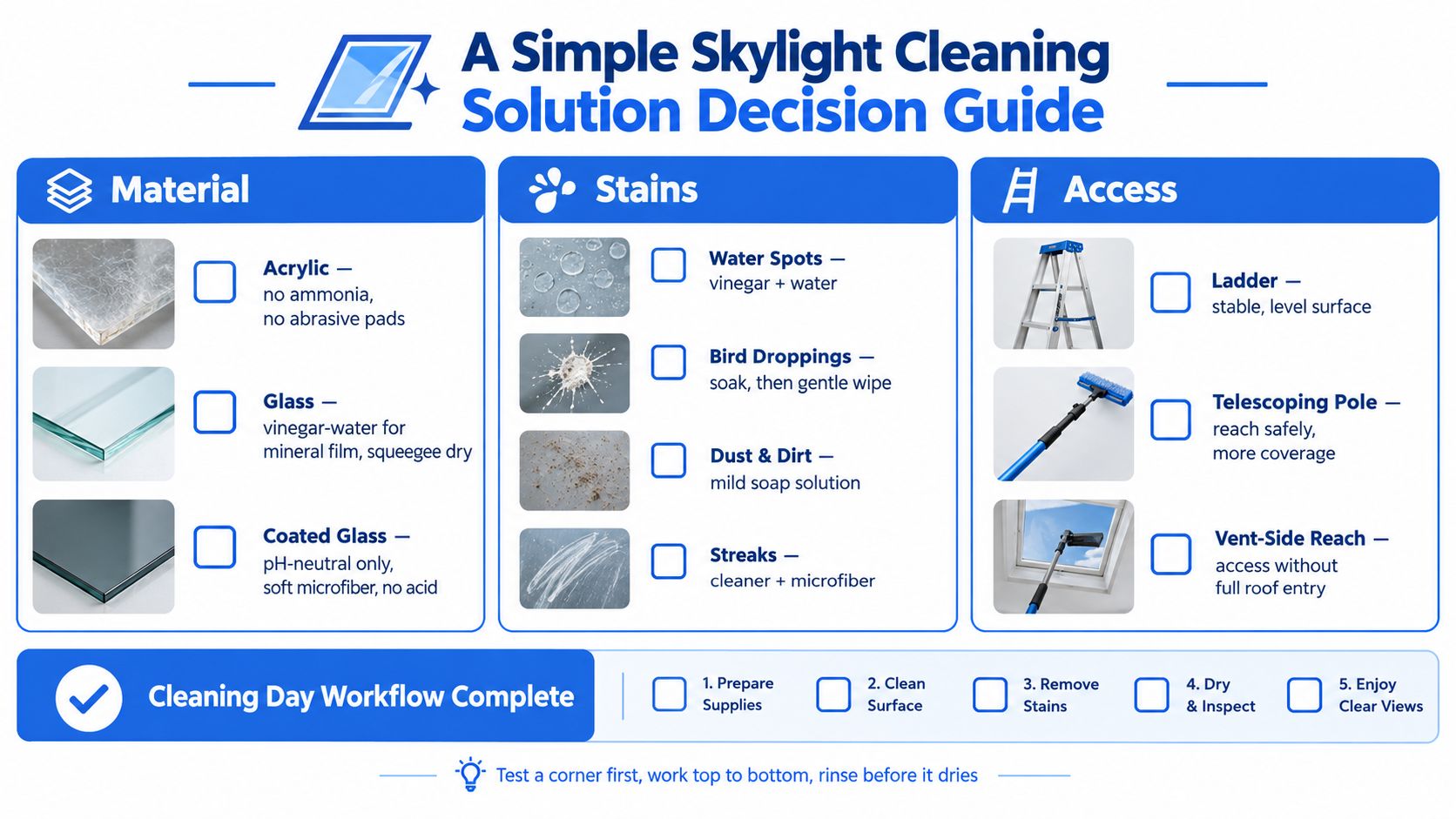
Cleaning day becomes much easier when you make three decisions in order: material, stain, and access. First identify the pane as glass, acrylic or polycarbonate, or coated glass. Then look closely at the soil. Finally decide whether a microfiber extension tool, water-fed pole, interior access setup, or trained professional access method can complete the work without stepping on an unsafe surface.
Use this workflow
-
Identify the material. Glass can accept more options than acrylic, polycarbonate, or coated glass, but every surface still needs a clean, non-abrasive applicator. If the manufacturer’s instructions are unavailable, start with water and pause before introducing a chemical.
-
Classify the stain. Dust and pollen usually need a gentle rinse. Coastal salt film needs complete removal and a low-mineral final rinse. Hard-water deposits may need an approved mild acid. Oxidation may require restoration chemistry rather than ordinary glass cleaner.
-
Choose the safest reach. Prefer a ground-level water-fed pole or extension-pole microfiber tool when it can reach the pane. Don’t walk on a skylight, and don’t use a ladder position that leaves you stretching sideways or working without stable footing.
-
Test before full application. Try the selected product on a small corner or inconspicuous edge. Watch for whitening, tackiness, color change, or unusual beading before treating the whole surface.
-
Rinse completely. A purified-water finish is a sensible default for exterior skylights because it reduces the mineral residue that causes spots during drying. Keep detergent out of seals, screens, vents, motors, and interior finishes.
Cleaning-day checklist
Do:
- Use clean tools: Choose a grit-free microfiber or soft brush and replace it when it becomes contaminated.
- Work in manageable areas: Keep the solution from drying before you rinse.
- Protect the frame: Control runoff around gaskets, flashing, screens, and vent hardware.
- Inspect the result: View the pane from below and from an angle as the light changes.
Don’t:
- Use abrasive pads: Scrubbing can create micro-scratches and permanent haze.
- Use ammonia by default: Unknown acrylic and coated glass need a material check first.
- Mix vinegar and bleach: Keep cleaning agents separate and follow each label.
- Reach beyond your safe position: A stubborn mark isn’t worth a fall.
- Ignore the assembly: If you see leaking, failed flashing, damaged seals, or condensation between panes, cleaning won’t correct the underlying issue. That is a job for a licensed roofer or the skylight manufacturer.
Aloha Window Bros provides residential and commercial window, screen, frame, sill, skylight, and solar-panel cleaning in Ventura County and Santa Barbara County, using purified water-fed poles for hard-to-reach glass where appropriate. If your skylight needs a material-safe cleaning plan and safer access than a ladder can provide, see what a professional skylight cleaning visit covers, then request a free quote.